
The Line Is Getting Blurrier: AI for Good or for Bad?
(From Bedrooms to Boardrooms, Humanity Faces Its Toughest Questions Yet)
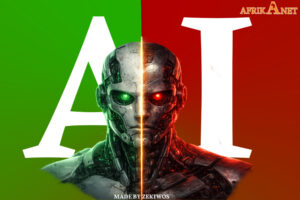 The Debate Everywhere
“AI isn’t confined to labs or think tanks. It’s in our bedrooms, where hobbyists train models to write, compose, and generate; in offices, where managers weigh efficiency against job displacement; and in governments, where policymakers wrestle with power and surveillance. Everywhere you turn, the question emerges: will AI help humanity, or will it magnify its darkest impulses?
AI for Good—Amplifying Human Potential
AI’s promise is profound:
Healthcare: Predictive diagnostics, robotic surgery, and AI-driven triage are saving lives daily. AI can detect diseases like cancer earlier than most human doctors.
Agriculture: Precision farming, crop forecasting, and automated irrigation help feed millions sustainably.
Social care: AI companions and assistance robots are helping the elderly maintain independence and mental health.
Creativity and knowledge: AI tools accelerate research, generate art, compose music, and help solve complex global problems.
Philosophical note: AI for good reflects human foresight, empathy, and collaboration. It’s the manifestation of humans extending their potential beyond natural limits.
“AI is a mirror that shows what humans are capable of—both in brilliance and in empathy.”
AI for Bad—Amplifying Risk and Harm
But AI is neutral—it reflects our worst impulses too:
-
Autonomous warfare: AI drones can make life-or-death decisions faster than humans.
-
Cybercrime and identity theft: AI can automate phishing, password cracking, and fraud at scale.
-
Social manipulation: Algorithms can amplify misinformation, sow discord, or surveil populations.
-
Bias and discrimination: Flawed training data embeds existing inequalities into AI systems.
Technology itself is not malevolent. The morality lies in design, oversight, and human intent.
“Every line of code carries the weight of ethical choice. AI doesn’t decide; we do.”
The Blurred Line—Gray Areas and Paradoxes
Here’s where it gets complicated: AI can be simultaneously good and bad.
Social media recommendation engines connect families but also spread propaganda.
AI in finance prevents fraud but also enables algorithmic exploitation of markets.
Autonomous medical systems save lives but carry catastrophic failure risks if misused.
Psychological lens: Humans struggle with dual-use technology. What’s beneficial for one may be harmful for another. AI forces us to confront trade-offs we’ve historically avoided.
Example anecdote: A hospital AI flagged patients for urgent care—saving lives—but a bias in the algorithm denied care to a minority group, showing how good intentions can have unintended negative consequences.
Why the Debate Is Universal
This isn’t a niche conversation; it’s everywhere:
Bedrooms: hobbyists experimenting with generative AI.
Offices: teams deploying automation and predictive analytics.
Government labs: AI shaping policy, surveillance, and defense.
Global conversation: tech leaders, ethicists, and civil society debating regulation and AI rights.
The debate mirrors human society itself: innovation vs. caution, liberty vs. control, optimism vs. fear. AI is the ultimate test of how humanity balances these forces.
The Future—A Reflection on Responsibility
The existential question: “Will AI amplify the best of humanity or the worst?”
Regulation is lagging: laws and norms struggle to keep pace with speed of development.
Education is key: people need digital literacy to understand AI’s reach.
Ethics must guide innovation: developers and policymakers must weigh human impact beyond profit and efficiency.
“The line between good and bad AI isn’t in the code—it’s in us. The debate isn’t happening somewhere else; it’s in every conversation, every experiment, every decision.”
Conclusion
AI is not inherently good or bad. It’s a magnifier: of intent, vision, ethics, and mistakes. And the debate is universal—from the bedroom coder to the policymaker. The line is getting blurrier, and the responsibility is ours.
“The real question isn’t what AI will become—but what we will become through it.