
proud for Black People! On this day in 1896, Ethiopian forces led by Emperor Menelik II delivered a historic defeat to the Italian army at the Battle of Adwa, securing Ethiopia’s sovereignty and sending shockwaves across Africa and the world. This victory was not merely a military achievement — it was a defining moment that challenged colonial ambitions and became a symbol of African resilience, pride, and strategic brilliance, maintaining the country’s long story of over 3,000 years of history and independence.
A Cinematic Moment of History
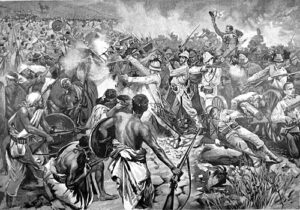 The Italians entered Ethiopia with overconfidence, armed with modern rifles, artillery, and colonial ambitions, expecting to impose their rule on one of Africa’s oldest civilizations. But they underestimated the unity, courage, and ingenuity of the Ethiopian defenders.
Menelik II, together with Empress Taytu Betul and a coalition of regional commanders, mobilized tens of thousands of warriors from every corner of Ethiopia. These forces were not just fighting for land — they were fighting for freedom, dignity, and the survival of their nation. Using the rugged highlands to their advantage, Ethiopian troops executed brilliant maneuvers, encircling the Italian forces and exploiting the terrain in ways the invaders could never anticipate.
The battle unfolded as a mixture of determination, strategy, and extraordinary courage. Ethiopian warriors, many wielding traditional weapons alongside rifles, charged with unmatched bravery, coordinated attacks, and fierce discipline. The Italians, unable to respond effectively, faced disarray, and their forces collapsed under the overwhelming coordination and morale of the Ethiopian army. By the end of the day, Ethiopia had achieved a decisive and historic victory, preserving its independence and humiliating one of Europe’s rising colonial powers.
Ethiopia’s Role and the Pan-African Legacy
The victory at Adwa was a turning point not only for Ethiopia but for the entire African continent. It sent a powerful message: Africa was not a passive land awaiting conquest. African nations could organize, resist, and triumph against foreign powers.
Ethiopia’s success inspired countless leaders and freedom fighters across the continent and the diaspora, fueling the Pan-African movement and providing a symbol of hope and resistance. As the only African nation never colonized, Ethiopia emerged as a beacon of sovereignty, courage, and political influence — showing that African nations could lead, protect their people, and serve as models for independence.
The Flag That Unites Generations
Ethiopia’s tri-color — green, yellow, and red — became a universal emblem of freedom, strength, and pride. Its symbolism extended far beyond national borders. Many African nations that later gained independence deliberately adopted the Ethiopian palette to honor the country’s courage and resilience. Nations such as Ghana, Burkina Faso, Togo, and the Republic of the Congo adopted these colors as a tribute to Ethiopia’s unbroken spirit and its enduring inspiration to African identity and unity.
A Legacy That Lives On
The Battle of Adwa is more than history; it is a story of unity, strategic brilliance, and unwavering courage. It reminds the world that African nations were capable of defending their sovereignty, that ordinary and extraordinary people alike could rise together to overcome overwhelming odds, and that the spirit of freedom and resilience is timeless.
On this day, Ethiopians celebrate not only a victory in battle but also a triumph for African dignity, independence, and pride. The story of Adwa continues to inspire generations, serving as a reminder that unity, courage, and determination can reshape history. From the ancient civilization of Aksum to now, Ethiopia stands as a symbol of continuity, strength, and unbroken heritage.
Lessons from Adwa for Today
The enduring lesson of Adwa is clear: unity is strength. When the Emperor called on every corner of Ethiopia to defend their homeland, armies from north, south, east, and west flooded to the frontlines, putting aside local differences to protect the nation. Strategy, collaboration, and courage turned the tide against a powerful invader.
In today’s world, the lesson is just as vital. Instead of tearing countries or Africa apart over personal ambitions, internal disputes, or divisions, we must embrace unity, cooperation, and shared purpose. Just as Ethiopia stood together to protect its land, modern nations and communities can achieve strength, progress, and resilience when they rise as one.
Adwa teaches us that a united people — guided by vision, strategy, and courage — can overcome overwhelming odds. The battle is more than history; it is a blueprint for leadership, solidarity, and the enduring power of unity in Africa and beyond.