
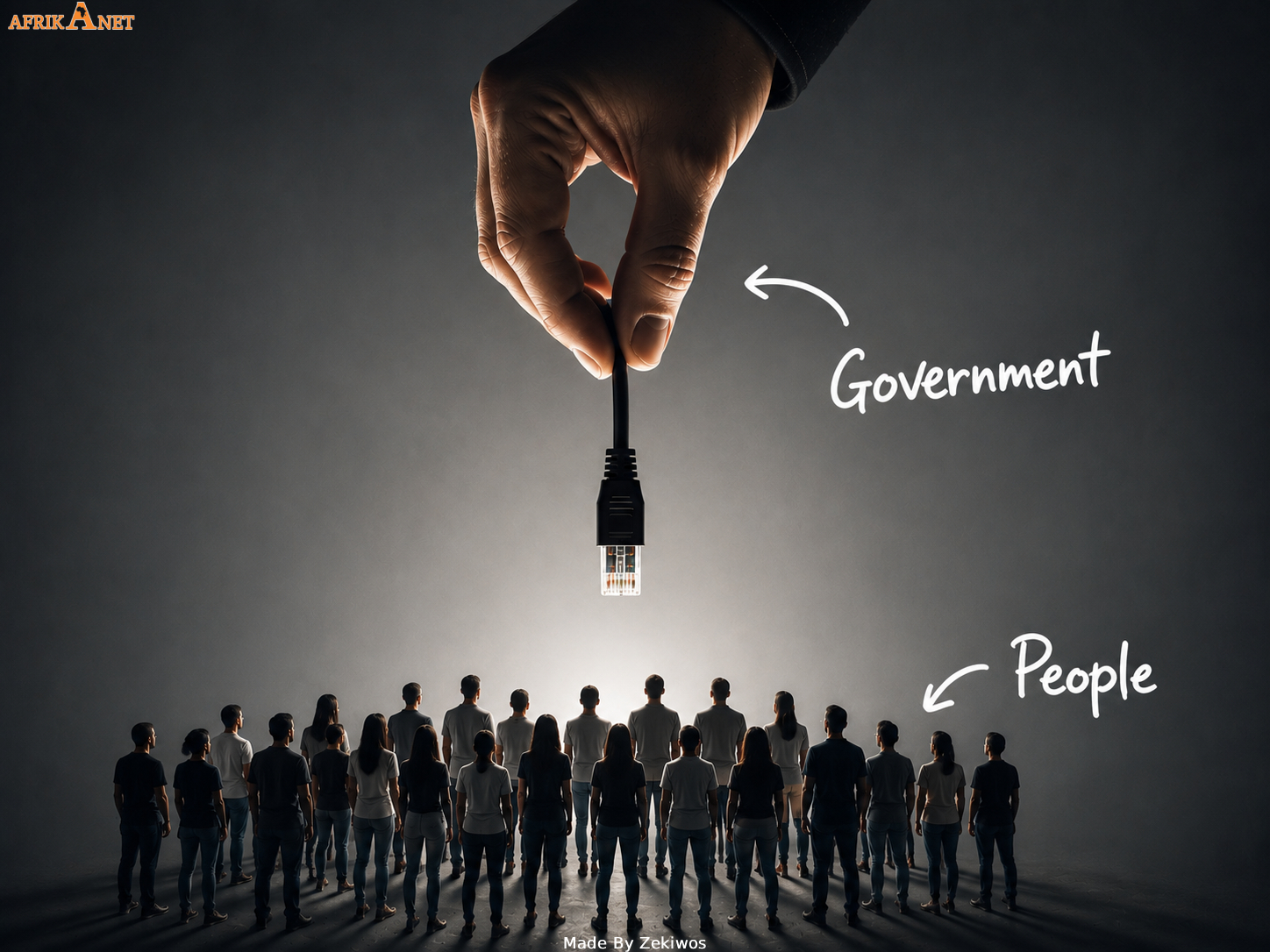
 It’s a question I’ve been thinking about for a long time, especially after seeing internet shutdowns happen in different parts of the world.
Governments have always played a role in telecommunications by issuing licenses, managing spectrum, and making sure networks operate properly. That part isn’t controversial. What I keep coming back to is whether any government should have enough control to disconnect millions of people from the internet with a single decision.
This isn’t only about Africa, but Africa has some of the clearest examples. Ethiopia has experienced internet shutdowns during periods of conflict, and Cameroon has restricted internet access in parts of the country during the Anglophone crisis. Similar things have happened in countries like India and Iran. The reasons given are different in every case, whether it’s security, public order, or political unrest. I’m not trying to judge every decision the same way. I’m more interested in what happens after the switch is flipped.
The people who feel it first usually aren’t politicians. They’re business owners who can’t process payments, students who suddenly lose access to online classes, families trying to reach relatives, freelancers who depend on an internet connection to work, and hospitals or emergency services that rely on digital communication. The internet isn’t just a place where people scroll through social media anymore. It’s part of how modern society works, and when it disappears, even for a short time, the effects spread much further than most people realize.
I also think this raises a bigger question about how communications infrastructure should be built. If a country depends on only a few providers, or if too much control is concentrated in one place, it becomes much easier for millions of people to lose access at once. That doesn’t mean private companies are automatically better than governments. Private companies have their own incentives and their own problems. But having more competition, different technologies, and more than one way to stay connected can make a country’s communications network stronger and more resilient.
Satellite internet is one example of how the landscape is changing. It’s not a replacement for fiber or mobile networks, and it won’t solve every problem. But it does introduce another option in places where people may have had very few choices before. The more ways people have to connect, the harder it becomes for a single point of failure to affect everyone at the same time. That’s good for consumers, businesses, and the digital economy as a whole.
I don’t think there’s a perfect answer to this debate. Governments have legitimate responsibilities when it comes to national security, public safety, and regulating telecommunications. At the same time, communication has become too important to everyday life for this power to go unquestioned. As more of our work, education, healthcare, and businesses move online, I think it’s worth asking whether communication networks should be designed to be more open, more competitive, and less vulnerable to a single decision. It’s a conversation every country should be having, not just those in Africa.