
Choosing and Caring for the Three Main Types of Solar Panels
Solar energy has moved from a futuristic idea to a practical, everyday solution for homes, businesses, and even portable devices. But once you decide to go solar, a big question appears: which type of solar panel should you choose, and how do you take care of it?
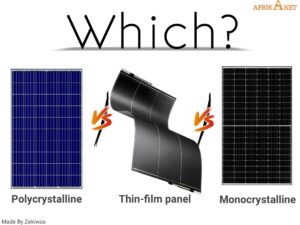
There are three main types of solar panels used today: monocrystalline, polycrystalline, and thin‑film. Each has its strengths, weaknesses, care requirements, and ideal use cases. Understanding these differences helps you invest wisely and get the best performance over time.
1. Monocrystalline Solar Panels
What they are
Monocrystalline panels are made from a single, pure silicon crystal. This gives them a uniform dark black color and a very organized internal structure, which allows electrons to move more freely.
Why people choose them
Monocrystalline panels are known for high efficiency. They typically convert more sunlight into electricity than other panel types, even in limited space. This makes them ideal for rooftops where area is limited.
Key advantages include:
Higher efficiency (often 20% or more)
Better performance in low-light conditions
Longer lifespan (25–30 years or more)
Sleek, premium appearance
The main downside is cost. Monocrystalline panels are usually more expensive due to the manufacturing process and high-quality materials.
How to care for them
Caring for monocrystalline panels is relatively simple:
Clean the surface every few months to remove dust, bird droppings, or pollution
Use soft water and a non-abrasive cloth or sponge
Inspect mounting and wiring once or twice a year
Because of their durability, they require little maintenance beyond basic cleaning.
2. Polycrystalline Solar Panels
What they are
Polycrystalline panels are made by melting multiple silicon crystals together. This process is simpler and cheaper, resulting in panels with a blue, slightly speckled appearance.
Why people choose them
These panels are popular for budget‑friendly installations. While they are less efficient than monocrystalline panels, they still offer reliable performance, especially where space is not a major issue.
Key advantages include:
Lower cost
Easier manufacturing process
Good performance in strong sunlight
Their disadvantages include slightly lower efficiency and reduced performance in very high temperatures compared to monocrystalline panels.
How to care for them
Polycrystalline panels need similar care:
Regular cleaning to avoid efficiency loss
Visual checks for cracks or shading issues
Ensuring good airflow underneath to reduce heat buildup
With proper care, polycrystalline panels can also last 25 years or more.
3. Thin‑Film Solar Panels
What they are
Thin‑film panels are made by layering photovoltaic material (such as amorphous silicon, cadmium telluride, or CIGS) onto glass, metal, or plastic. They are thin, flexible, and lightweight.
Why people choose them
Thin‑film panels are valued for flexibility and versatility, not maximum efficiency. They are often used in large commercial projects, portable solar devices, or buildings where traditional panels are impractical.
Key advantages include:
Lightweight and flexible
Better performance in high temperatures
Lower upfront cost
Easier installation on curved or weak surfaces
The trade‑off is efficiency and lifespan. Thin‑film panels usually require more space to produce the same power and may degrade faster over time.
How to care for them
Thin‑film panels are generally low‑maintenance:
Gentle cleaning (they can be more delicate)
Regular inspections for peeling or moisture damage
Protection from physical impact
They are best suited for specific applications rather than small residential rooftops.
How Do You Choose the Right Panel?
Choosing the right solar panel depends on your goals, location, and budget.
If you want maximum power in limited space, choose monocrystalline.
If you want a balanced option at a lower cost, polycrystalline is a solid choice.
If you need flexibility or lightweight panels, thin‑film may be ideal.
Climate also matters. Hot regions benefit from panels with better heat tolerance, while dusty areas require panels that are easy to clean and maintain.
Long‑Term Care Tips for All Solar Panels
No matter which type you choose, these care practices apply to all:
Keep panels clean and free from shade
Monitor output regularly to detect issues early
Ensure proper installation to avoid water leakage or loose wiring
Schedule professional inspections every few years
Proper care can increase efficiency, extend lifespan, and protect your investment.
Conclusion
Solar panels are not all the same. Monocrystalline panels offer top performance, polycrystalline panels provide affordability, and thin‑film panels deliver flexibility. Understanding how each type works—and how to care for it—helps you make a smart, long‑term decision.
In the end, the best solar panel is the one that fits your energy needs, environment, and budget, while being properly maintained for years of clean, renewable power.
Sources
U.S. Department of Energy – Solar Photovoltaic Technology Basics
https://www.energy.gov/eere/solar/solar-energy-basicsNational Renewable Energy Laboratory (NREL) – Solar Panel Efficiency and Performance
https://www.nrel.gov/research/solar.htmlEnergySage – Types of Solar Panels Explained
https://www.energysage.com/solar/solar-panel-types/International Energy Agency (IEA) – Solar Power Technology Review
https://www.iea.org/energy-system/renewables/solar-pvSolarReviews – Monocrystalline vs Polycrystalline vs Thin-Film Panels
https://www.solarreviews.com/blog/monocrystalline-vs-polycrystalline-vs-thin-film-solar-panels